
Is Your Home Too Humid? Why a Whole-Home Dehumidifier Makes All the Difference in a Summer
Why Spring Is the Time to Get Ahead of Humidity Season
Most homeowners think about humidity the moment summer hits — when the house feels sticky, the air feels heavy, and even a cool room somehow feels uncomfortable. But by the time you notice it, your home has already been struggling for weeks.
In Rhode Island and Southeastern Massachusetts, humidity season doesn't wait for July. It builds quietly through May and June, and homes that aren't prepared feel it in ways that go well beyond comfort.
Understanding what's happening — and what you can do about it now — makes the difference between a summer that feels under control and one that doesn't. Whole-home dehumidification is one of the most impactful upgrades a New England homeowner can make, and spring is the smartest time to act.
What Humidity Actually Does to Your Home
Humidity isn't just an outdoor problem. In a sealed-up New England home, moisture accumulates from cooking, showers, breathing, and the humid outdoor air that seeps in through every gap and opening. When indoor relative humidity climbs above 50%, it creates conditions that make your home feel warmer than it actually is, force your air conditioner to work harder and run longer, and put stress on everything from wood floors to painted walls to structural framing.
The target range for indoor relative humidity is 30–50%, with 45–50% being the practical sweet spot during warmer months. Above that threshold, you're not just uncomfortable — you're accelerating wear on your home and your HVAC system simultaneously.
High humidity also makes temperature control less efficient: a home at 72°F and 65% relative humidity feels noticeably warmer than the same home at 72°F and 45% relative humidity. Your thermostat doesn't measure how the air feels — only what temperature it is.
Over a full New England summer, that inefficiency adds up. Systems that run longer burn more energy, accumulate more wear, and are more likely to need service. Managing humidity isn't a luxury — it's part of managing your home efficiently.
Signs Your Home Has a Humidity Problem
A few things worth paying attention to as the season changes:
- The air feels heavy or clammy even when the AC is running
- Windows show condensation on the inside during warmer days
- Wood floors, cabinets, or door frames are warping, swelling, or sticking
- A musty smell in basements, closets, or near vents
- Allergy or respiratory symptoms that seem worse indoors than outside
- Your AC runs almost continuously but the house never quite reaches setpoint
- Paint peeling or bubbling on walls and ceilings
- Electronics or musical instruments behaving oddly from moisture exposure
Many homeowners assume these issues are simply part of summer in New England. They're not inevitable. They're signs that the moisture in your home isn't being properly managed — and that the right system could change the experience of your entire warm season.
Why Your Air Conditioner Can't Do It All
Your central air conditioner removes some humidity as it runs — that's a byproduct of the cooling process, not the primary function. As warm air passes over the cold evaporator coil, moisture condenses out. When conditions are moderate and your system is sized correctly, this incidental dehumidification may be sufficient. But in a humid New England summer, especially in homes with basements, crawl spaces, or older construction, an AC alone often falls short.
An oversized AC system is actually one of the most common contributors to humidity problems. When a system cools the space too quickly, it shuts off before it's had enough run time to pull adequate moisture from the air. The result is a home that's technically at the right temperature but still feels damp and uncomfortable — a condition sometimes called "cold and clammy." The system ran, hit the temperature target, and turned off. But the humidity never got addressed.
Conversely, an undersized system runs almost constantly trying to keep up with heat load, which does remove more humidity but at the cost of excessive wear and energy consumption. Neither scenario is a substitute for dedicated humidity management.
Midpoint Insight: Whole-Home Dehumidification Changes the Equation
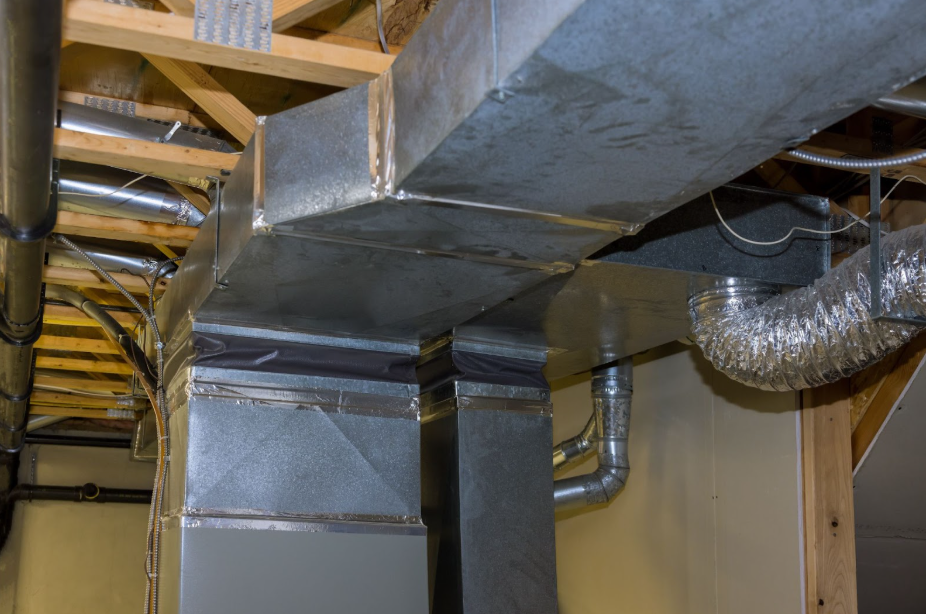
A whole-home dehumidifier works alongside your existing HVAC system to actively pull excess moisture from the air throughout your entire home — not just one room at a time. Unlike portable units that require frequent emptying, generate their own heat, and cover limited square footage, a whole-home system is integrated directly into your ductwork and runs automatically based on a target humidity level you set and forget.
This is why homeowners across East Bay, Aquidneck Island, Jamestown, and out to Westport turn to Lawrence Air Systems for whole-home dehumidification solutions. A properly sized and installed dehumidifier — matched to your home's square footage, layout, and construction — can transform how your home feels all summer long, while reducing the load on your AC and helping your system run more efficiently.
The U.S. Department of Energy recommends maintaining indoor humidity between 30–50% for both comfort and long-term home health.
The AprilAire Difference: Built for New England Conditions
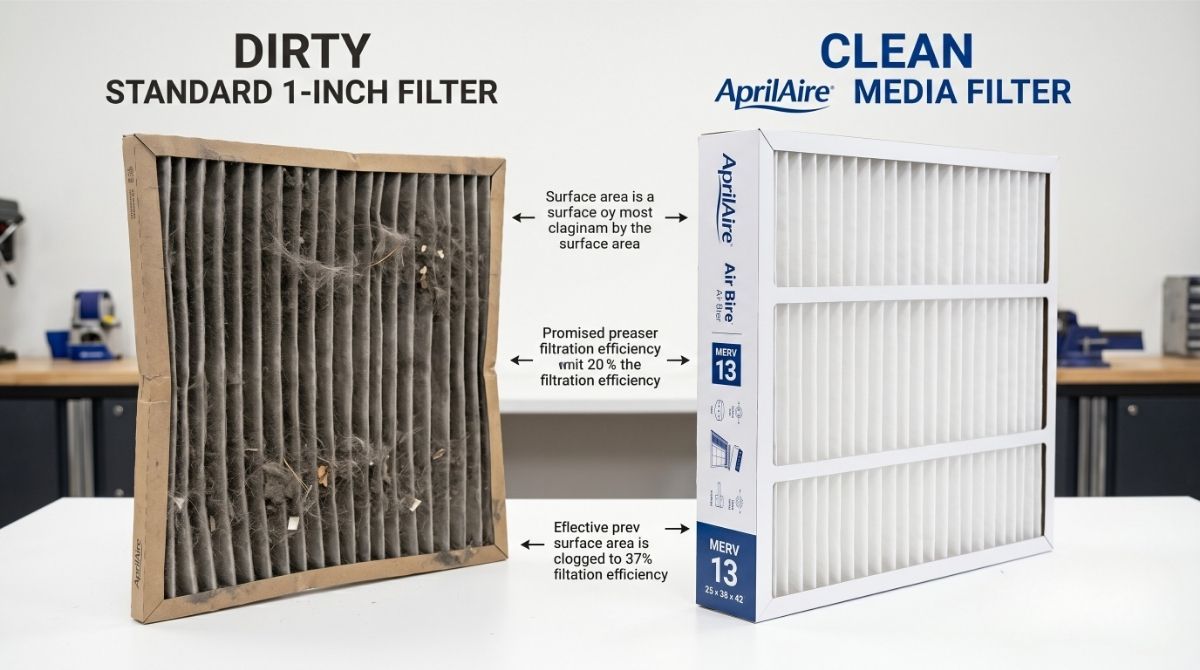
Lawrence Air Systems installs AprilAire whole-home dehumidifiers, including the E100 model, which is designed specifically for the demands of humid climates and New England's challenging summer conditions. AprilAire systems are built to handle high moisture loads efficiently, with easy-to-set digital controls that allow you to dial in a target humidity level and let the system manage the rest automatically.
The E100 can remove up to 100 pints of moisture per day — a capacity that makes a meaningful difference in larger homes or those with persistent moisture sources like basements, crawl spaces, or aging construction. Unlike portable units that recirculate the heat generated during dehumidification back into the living space, a whole-home system exhausts that heat outside or back through the duct system, keeping your home both drier and cooler.
What separates a professionally installed whole-home system from anything available at a hardware store isn't just capacity — it's integration. A system connected to your ductwork treats every room evenly, works in tandem with your air conditioner, and requires no daily attention from the homeowner. Set the target humidity, and the system handles the rest.
Basements and Crawl Spaces: Where Humidity Starts
In most Rhode Island and Southeastern Massachusetts homes, the basement is where humidity problems originate. Even a finished basement with good insulation allows ground moisture to migrate into the living space through concrete and block foundations. Crawl spaces are often worse — with direct soil exposure and limited air circulation, they can be major sources of moisture that then moves upward through the rest of the home.
The EPA's guidance on indoor air quality and moisture control is clear that managing moisture at the source — starting at the foundation level — is the most effective long-term strategy for healthy indoor air and home preservation.
A whole-home dehumidifier placed in the mechanical room or basement and connected to the duct system handles this at the source before the moisture migrates upward into finished living areas. For many homeowners, this single addition resolves problems they've been dealing with for years — musty smells, condensation, allergy symptoms — without any other changes to the home.
What Happens to Your Home and HVAC Without Humidity Control
The effects of unmanaged humidity accumulate over time in ways that aren't always obvious until they're expensive. Excess moisture in the air creates conditions for microbial growth on evaporator coils, inside ductwork, and on building surfaces. It accelerates corrosion on HVAC components. It causes wood to expand and contract with seasonal moisture changes, loosening joints, warping floors, and stressing structural elements.
From a comfort standpoint, high humidity means your AC runs more and wears out faster. A home consistently maintained at proper humidity levels sees fewer system issues and a noticeably more comfortable living environment — not just in summer, but year-round.
What to Expect After Installation
Homeowners who add a whole-home dehumidifier typically notice the difference within the first few days of operation:
- Air that feels noticeably lighter and more comfortable at the same temperature
- The AC reaching setpoint faster and cycling off sooner
- Lower energy consumption as the overall HVAC load decreases
- Elimination of musty odors in basements and lower levels
- Reduced allergy and respiratory symptoms for sensitive household members
- Better protection for wood floors, furniture, cabinetry, and building materials
The combination of improved comfort and reduced AC runtime contributes to long-term energy savings and avoided wear — while delivering a noticeably better living environment from day one.
The Right Time to Act Is Before You Feel It
May is the ideal time to address humidity — before the heavy summer air sets in and before service schedules fill up. The experienced team at Lawrence Air Systems can assess your home's current setup, evaluate your basement and mechanical room, recommend the right AprilAire system for your square footage and construction type, and complete the installation before the first humid stretch of summer arrives.
Members of the Annual Maintenance Program receive priority scheduling and member-only savings on equipment and installation — which means getting ahead of humidity season is both easier and more cost-effective for those already enrolled.
Preventive service is always less disruptive and less expensive than dealing with the consequences after the fact. A whole-home dehumidifier is exactly that kind of proactive investment — one that pays dividends in comfort, efficiency, and home health every season it runs.
Frequently Asked Questions
What humidity level should my home be at in summer?
The recommended range is 30–50% relative humidity. During warmer months, 45–50% is a practical target that balances comfort with moisture control. Anything consistently above 55% warrants attention.
Can a portable dehumidifier do the same job as a whole-home system?
Portable units work for limited spaces but can't treat the whole home evenly, require frequent emptying, and generate heat that returns to the living space. A whole-home system integrates with your HVAC for automatic, whole-house coverage with no daily maintenance required.
Will a whole-home dehumidifier reduce my energy consumption?
In most cases, yes. By reducing the moisture load your AC has to manage, a properly sized dehumidifier allows the system to run less and reach setpoint faster. The extent of the benefit depends on your home's current moisture levels and how hard your AC has been working to compensate.
How long does installation take?
A whole-home dehumidifier installation typically takes a few hours and is completed in a single visit. The system connects to your existing ductwork and is ready to operate the same day.
Does a dehumidifier work year-round?
Whole-home dehumidifiers are primarily used during warmer months when outdoor humidity is highest. Many homeowners run them from May through September. In winter, indoor humidity typically needs to be added rather than removed, which is where whole-home humidifiers play a role.
How do I know if my basement is causing humidity problems upstairs?
If you notice a musty smell near stairwells or lower-level vents, see condensation on basement windows, or feel that the first floor is consistently clammier than upper levels, ground-level moisture migration is likely contributing. A professional evaluation of your mechanical room and foundation areas can confirm the source.
Can a whole-home dehumidifier work with my existing HVAC system?
Yes. Whole-home dehumidifiers are designed to integrate directly into your existing ductwork. They work alongside your current air conditioner and heating system without requiring a full system replacement or major modifications.
Does Lawrence Air Systems offer maintenance for dehumidifiers?
Members of the Annual Maintenance Program receive Total System Cleanings that cover connected equipment, including whole-home dehumidifiers. Members also receive priority scheduling and member-only savings on service and repairs.
Don't Wait for a Sticky July to Think About This
Humidity problems don't announce themselves — they build slowly until the whole house feels off. By the time most homeowners are ready to do something about it, the most comfortable weeks of the warm season are already behind them and service schedules are packed. A whole-home dehumidifier is one of the most effective, highest-impact upgrades a New England homeowner can make for comfort, air quality, and HVAC efficiency.
If your home felt sticky or damp last summer, this is the year to address it before it happens again. The trusted team at Lawrence Air Systems can help homeowners across East Bay, Aquidneck Island, Jamestown, and out to Westport evaluate their homes and find the right dehumidification solution before the season arrives. Call (401) 213-1516 to schedule a complimentary consultation or learn more about AprilAire whole-home dehumidifier options for your system. You can also connect with us on Facebook.




Share On: