
Allergy Season and Your HVAC: How the Right Filtration System Can Help You Breathe Easier at Home
Why Spring IAQ Is One of the Most Important Home Investments You Can Make
Spring in Rhode Island and Southeastern Massachusetts means longer days, warmer weather, and for a significant portion of the population — allergy season. Pollen counts climb from April through June. Windows open and close with the weather, introducing outdoor allergens into the home in unpredictable waves. And for households with pets, children, or anyone managing asthma or respiratory sensitivities, the air quality inside the home during these months deserves serious, deliberate attention.
What most homeowners don't fully appreciate is that their HVAC system is the single most powerful tool available for managing indoor air quality. Used well — with the right filtration, the right products, and proper maintenance — it can dramatically reduce the allergens, particles, and pollutants circulating through the home. Used without attention, or with a standard builder-grade filter, it can move the same contaminants from room to room without meaningfully reducing them.
This spring, the right IAQ strategy can change how your home feels for the entire warm season.
What's Actually in Your Indoor Air During Allergy Season
During peak spring allergy season, the air inside a typical home carries a complex mix of particles. Pollen that drifts in through doors, windows, and building gaps is the most obvious source, but it's only part of what's circulating. Indoor air also contains dust mite particles, pet dander, cooking byproducts, VOCs from cleaning products and off-gassing materials, fine particulates that have accumulated in ductwork over the winter, and biological particles from any moisture-related growth on HVAC components.
The EPA's Indoor Air Quality Guide notes that indoor air can be significantly more polluted than outdoor air — a reality that surprises most homeowners, who assume that being inside provides protection from outdoor allergens.
A home's envelope concentrates pollutants. Every time a door opens, outdoor air comes in. Every time the HVAC system runs, it circulates whatever is present in the duct system throughout the home. During allergy season, with windows occasionally cracked and household activity at its peak, the indoor particle load can be significant — and a standard filter isn't built to address it.
Why a Standard 1-Inch Filter Isn't Enough
The 1-inch filter that comes standard with most HVAC systems is designed to protect the equipment — specifically, to prevent large particles from damaging the blower motor and evaporator coil. It does that job reasonably well. What it doesn't do is protect the people in the home. The fine particles that trigger allergy symptoms — pollen, fine dust, pet dander, microbial growth spores, smoke particles — pass right through a standard filter and continue circulating through the living space.
MERV ratings provide a standardized way to compare filter performance. A MERV 8 filter catches most visible dust and larger pollen particles. A MERV 11 filter captures finer particles including pet dander. A MERV 13 filter — the minimum recommendation for households with allergy concerns — captures fine particles including some bacteria, smoke, and fine particulate matter.
But the balance matters significantly. Increasing filtration without considering your system's airflow capacity can create problems of its own. A filter with too high a resistance for your blower forces the motor to work harder, reduces airflow, and can cause the system to freeze up or overheat. This is why filter selection isn't a one-size-fits-all decision — it requires understanding your specific system's capabilities and your home's air quality challenges together.
Midpoint Insight: A Layered IAQ Approach Works Better Than Any Single Product
The most effective indoor air quality strategy isn't a single product — it's a layered approach that addresses particles, pollutants, and biological contaminants through multiple mechanisms working in coordination. High-efficiency filtration captures particles at the filter. In-duct air purification reduces the particle load before it reaches the filter. Duct cleaning removes the accumulated debris that has built up over years of system operation. Together, these systems produce air quality results that no single product can match.
This is the approach that Lawrence Air Systems brings to IAQ assessments for homeowners across East Bay, Aquidneck Island, Jamestown, and out to Westport. Rather than recommending a single product, the team evaluates your current system, your home's specific air quality challenges, and your household's needs — then identifies the combination of solutions that will make the most meaningful, measurable difference.
AprilAire High-Efficiency Filtration: The Foundation of Whole-Home IAQ
AprilAire whole-home air filtration systems are designed to work with your HVAC system rather than against it. Their high-capacity deep media filters capture up to 98% of airborne particles — including fine dust, pollen, pet dander, and microbial growth spores — while maintaining the airflow your system needs to operate efficiently.
The filter housing replaces the standard filter slot and allows for high-capacity media that provides significantly better filtration without the airflow restrictions associated with standard high-MERV filters. Learn more about AprilAire filtration options available through Lawrence Air Systems.
Unlike a standard 1-inch filter that needs replacement every 30–90 days, AprilAire deep media filters are engineered for longer service intervals — often six months to a year depending on household conditions. The ENERGY STAR program for air cleaners and air filters provides additional guidance on evaluating filtration products that meet certified efficiency and performance standards for residential use.
REME HALO LED: In-Duct Air Purification
For households dealing with persistent allergy symptoms, pet dander, or indoor air quality concerns that filtration alone doesn't fully address, the REME HALO LED in-duct air purifier extends the approach. Installed directly into your supply air plenum, the REME HALO LED uses an LED-charged purification process to charge particles in the air, causing them to clump together into larger clusters that are significantly easier for your filter to capture.
The important distinction is that the REME HALO LED works proactively — it treats the air before it circulates through the system and into the living space, rather than waiting for particles to reach the filter. This reduces the total particle load your filter has to handle, extends filter life, and produces measurably cleaner air throughout the entire home.
The REME HALO LED does not use UV technology. It uses a specific LED charging mechanism that produces the ionization effect without generating ozone at levels of concern. It carries a 5-year warranty and requires minimal maintenance once installed.
iWave: Self-Cleaning Air Purification for Low-Maintenance Households
The iWave is another in-duct air purification option that Lawrence Air Systems installs for homeowners looking for effective air quality improvement without ongoing maintenance. The iWave features a self-cleaning design that automatically maintains its effectiveness over time without requiring annual cartridge replacement — a practical advantage for households that want cleaner air without adding items to their maintenance checklist. The iWave carries a 3-year warranty and is well-suited for homes where low maintenance is a priority.
Both the REME HALO LED and iWave work through the principle of ion-based purification — charging airborne particles to encourage clumping and improve capture efficiency. The right choice between them depends on your home's size, your system's airflow characteristics, and your household's specific air quality priorities. A professional evaluation can identify which product delivers the best outcome for your specific situation.
Duct Cleaning: Addressing the Source
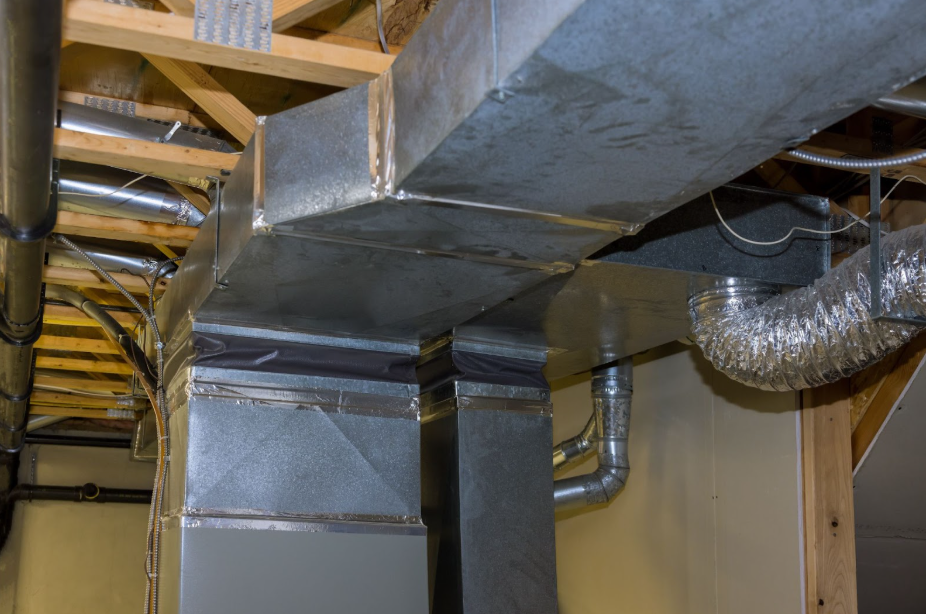
If your ductwork hasn't been professionally cleaned in several years, spring is an important time to address it. Over a winter of continuous heating operation, dust, pet dander, fine debris, and particulate matter accumulate in the duct system. When your system transitions to cooling in spring, it distributes that accumulated buildup throughout the home with every cycle. Learn about professional duct cleaning and how it complements your IAQ upgrade.
Professional duct cleaning removes the source material before allergy season begins in earnest. Combined with an AprilAire filtration upgrade, it gives your system a genuinely clean start for the season and ensures that the air circulating through your home is being properly cleaned from the moment the cooling season begins.
Practical Steps You Can Take Right Now
Before scheduling a professional evaluation, there are a few straightforward things worth doing today:
- Check your current filter — if it's been more than 60 days, replace it immediately
- Keep windows closed during high pollen count mornings, typically before 10 AM when pollen concentrations are highest
- Run your HVAC fan on "circulate" mode to continuously filter air even when not actively heating or cooling
- Vacuum with a HEPA-filter vacuum to reduce the particle load that makes its way into your duct system
- Shower after time outdoors to avoid bringing pollen into the home on clothing and hair
- Consider a professional IAQ assessment if symptoms persist despite these steps
These habits genuinely help. But for households dealing with meaningful allergy symptoms, they're a starting point — not a complete solution. The right whole-home IAQ setup addresses what individual habits can't: the particle load that's already in the air, cycling through your system, every hour of every day.
The Annual Maintenance Program and IAQ
Members of the Annual Maintenance Program receive priority scheduling, member-only savings on service calls and equipment, and access to after-hours service. For homeowners investing in an IAQ upgrade this spring, AMP membership means ongoing professional attention to the systems that protect your indoor air quality — including filter checks, system performance evaluations, and Total System Cleanings that keep everything functioning as designed.
A Total System Cleaning in spring — part of the AMP schedule — includes evaluation of the components most relevant to air quality: the evaporator coil, blower assembly, and air distribution system. Catching microbial growth, debris accumulation, or airflow restrictions early keeps the system performing at its best through the full cooling season.
Frequently Asked Questions
What MERV rating filter should I use for allergies?
MERV 11–13 is generally recommended for households with allergy or asthma concerns. However, the right rating depends on your system's airflow capacity. A professional can confirm what your system can handle without restricting performance — and an AprilAire whole-home filtration system is specifically designed to deliver high-efficiency filtration without airflow compromise.
How often should I change my filter during allergy season?
More frequently than off-season — check monthly and replace when visibly dirty. Homes with pets or high pollen infiltration may need filter changes every 30–45 days during peak season. AprilAire deep media filters are designed for longer intervals, which is one of their key advantages over standard 1-inch filters.
Does the REME HALO LED produce ozone?
The REME HALO LED produces ionization levels that are well within safe thresholds established for occupied spaces. It does not use UV light and is specifically designed to operate safely in residential environments with continuous occupancy.
Is an air purifier worth it if I already have a good filter?
Yes — filtration and purification address different aspects of indoor air quality. A good filter captures particles when they reach the filter. An in-duct purifier like the REME HALO LED or iWave works proactively to reduce the particle load before it reaches the filter, making the entire system more effective and extending filter life.
How do I know if my ducts need cleaning?
If it's been more than 3–5 years since a professional duct cleaning, or if you've recently done renovation work, moved into the home, or noticed increased dust accumulation on surfaces, a professional evaluation is worthwhile. Duct cleaning before allergy season ensures your system isn't distributing accumulated debris from the heating season into your living space.
Can I run my HVAC fan continuously during allergy season without damaging the system?
Yes. Most modern systems have a "circulate" or "fan on" setting that runs the blower at a lower speed to move air through the filter continuously. This provides ongoing filtration even when the system isn't actively heating or cooling. It increases filter usage slightly, so check your filter more frequently when running in this mode.
What's the difference between the REME HALO LED and the iWave?
Both use ion-based purification to charge airborne particles and improve filter capture. The REME HALO LED carries a 5-year warranty and uses an LED-charged process. The iWave features a self-cleaning design, carries a 3-year warranty, and requires less maintenance. A professional evaluation can determine which product is the best fit for your system and household needs.
Does Lawrence Air Systems offer IAQ assessments?
Yes. The team provides in-home air quality assessments that evaluate your current filtration, ductwork condition, and system performance — then recommends the right combination of upgrades for your home. Members of the Annual Maintenance Program receive priority scheduling and member-only savings on equipment and installation.
This Season, Your Home Should Feel Like a Relief
If allergy season means your home feels almost as uncomfortable as being outside — or if symptoms that should improve when you come inside don't — your HVAC system isn't doing everything it could. The right combination of filtration, purification, and duct care, matched to your specific home and household, can genuinely change that. An informed homeowner is a comfortable homeowner.
The experienced team at Lawrence Air Systems can help homeowners across Rhode Island and Southeastern Massachusetts evaluate their current IAQ setup and identify the right combination of solutions to make this spring and summer noticeably more comfortable for every member of the household. Call (401) 213-1516 to schedule an in-home air quality assessment or ask about AprilAire, REME HALO LED, and iWave options for your system. You can also connect with us on Facebook for seasonal tips, team updates, and homeowner resources.




Share On: